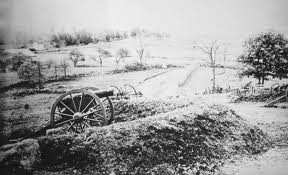
 1863. Stevens’ Knoll Gettysburg, Pennsylvania. James Pierce Collection. http://commons.wikimedia.org/wiki/File:Barlows_Knoll_after_first_day's_battle,_Gettysburg,_July_1,_1863. Accessed 16 April 2013. This website uses GPS locations to take students on a scavenger hunt of sorts. If this particular lesson wouldn't work, at the very least it gives an ides of how using GPS locations can be included in a lesson plan. | The following is an augmented reality lesson plan for high school students dealing with the Battle of Gettysburg. 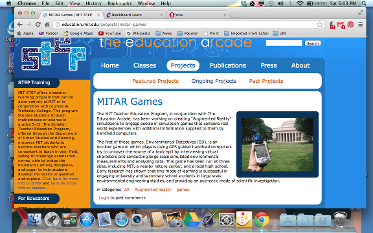 |
 Not only can AR programs such as Nintedo's Wii and Xbox's Kinnect be used in physical education classes, but what about using it in a science class during a nutrition unit. Students could use the program as a way of collecting data about the burning of calories when exercising. This AR program can also be a great activity for younger and more energetic students who require physical activity within the day. Within the confines of a classroom students can expend extra energy! In addition to using WII or Kinnect for its more physical games, each company puts out a wide variety of educational AR activities. 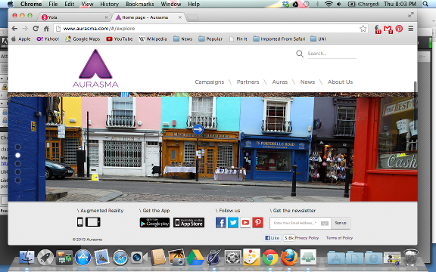 World Lens is an Iphone/Android app with which travelers can translate the written word of a foreign language...but what about using it in a World Cultures class or a Foreign Language class. A teacher could send the students to another country and have them use World Lens to translate the images/text that they find in their research. | Layar could be used in multiple ways in the classroom. In art class students could layer information about the artist who inspired the painting. The student might also have another layer where the student talks about the artistic process. Layar could also be used for students to research in nearly any class. A student might find a picture of an animal, an author, a landmark, ect. Using layar they could put the research information over the picture. Layar could be used as a school project for an open house or a "Meet the Teacher" night. Teachers could post pictures of them teaching and then explain what is going on in the picture, give personal and/or professional information, or post information about the school year. Click here for the link to Layar. 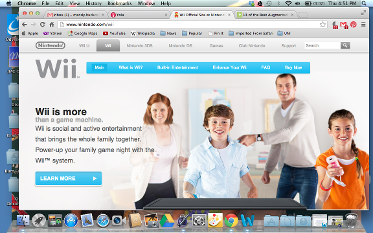 Aurasma is very much like Layar. With this application the creator can implant images or information onto a picture. One example of this would be for a teacher to take a photo of each book in their student library, then have the teacher or student create a book talk about the book. Another idea would be for students to research a element on the periodic table and share that information. 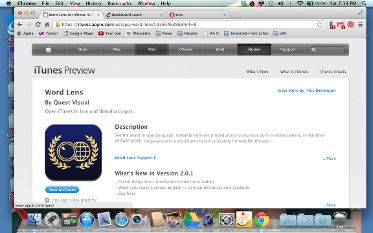 |
Challenges...
- "The AR approach has to add more value and be easier to use than a currently available situation for me to use it. Since I can use any modern mapping app to find static locations nearby" (Tofel, 2009).
- Like anything, technology is great when it works...Because much of AR is reliant on Smart phones, there would be little technology support for these apps.
- I also would be concerned about not having enough resources (Smart phones, Tablets, etc.) Although many students do have these technologies...the amount of resources available could vary widely by class.
- "...even with much improved hardware, significant challenges are remaining. We therefore conclude that we are still far from being able to use AR as a generally available feature on smartphones" (Arth & Schmalsteig, 2012).
Oh, the possibilities...
“We need technology in every classroom and in every student and teacher’s hand, because it is the pen and paper of our time, and it is the lens through which we experience much of our world.” – David Warlick
